
News 09/07/2026
Reflection on the 2026 Chamber Music America Conference: Finding Our Own Artistic Voice as an Ensemble
by Xia Jing
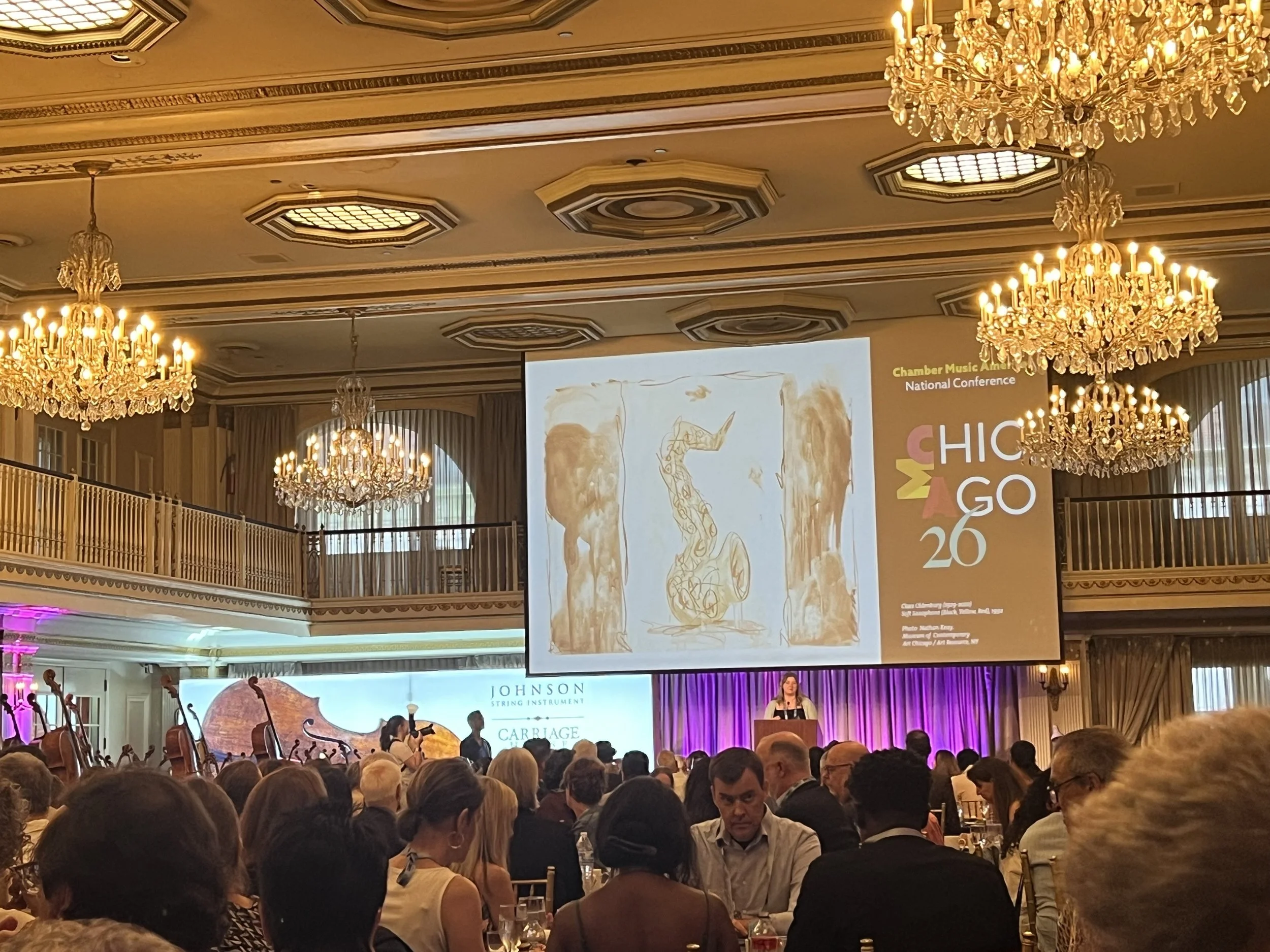
Duo Chinoiserie was featured at the 2026 Chamber Music America National Conference in Chicago. Being at the CMA conference was such an inspiring experience—the presentations, panels, conversations, and performances gave me many new perspectives that I think are relevant to what we are developing together.
One of my biggest takeaways was the importance of finding our own artistic voice. As a musician working with a non-Western instrument and across different musical traditions, I was inspired to think beyond simply fitting into an existing Western chamber music model. Instead, we can ask: What is distinctive about our own cultural and musical backgrounds? How can we develop that into an authentic artistic voice and create new possibilities within today’s chamber music community?
I was also thinking a lot about ensemble identity and development. There were so many different kinds of ensembles at CMA, each with its own instrumentation, repertoire, artistic vision, and way of connecting with audiences. It reminded me that a strong ensemble is not only about playing well together—it is also about understanding who we are, what we want to communicate, and what makes our work meaningful within a diverse chamber music community.
From an educational perspective, I came away thinking about how we prepare students not only to become stronger musicians, but also to develop the broader skills they will need after school: collaboration, communication, creativity, leadership, project development, community engagement, and the ability to create their own opportunities.
I was equally inspired by the discussions around organizational development. Partnerships and collaborations can allow us to do much more than we could accomplish alone. Working with schools, cultural organizations, community groups, presenters, health and wellbeing programs, and other arts organizations can open unexpected possibilities.
Finally, audience development and community connection really stood out to me. Rather than thinking only about how to bring audiences into a traditional concert setting, we can think more broadly about meeting people at where they are, what they need, and how music can connect with their lives. Education, wellbeing, cultural exchange, community engagement, and performance do not necessarily need to be separate areas—they can support and strengthen one another.
Overall, CMA encouraged me to think about our work from several connected perspectives: artistic identity, ensemble development, education, organizational partnerships, and audience/community development.