
News March 2026: Revival of Himiko with Ballet Tucson
A Mesmerizing Encounter of Movement and Music
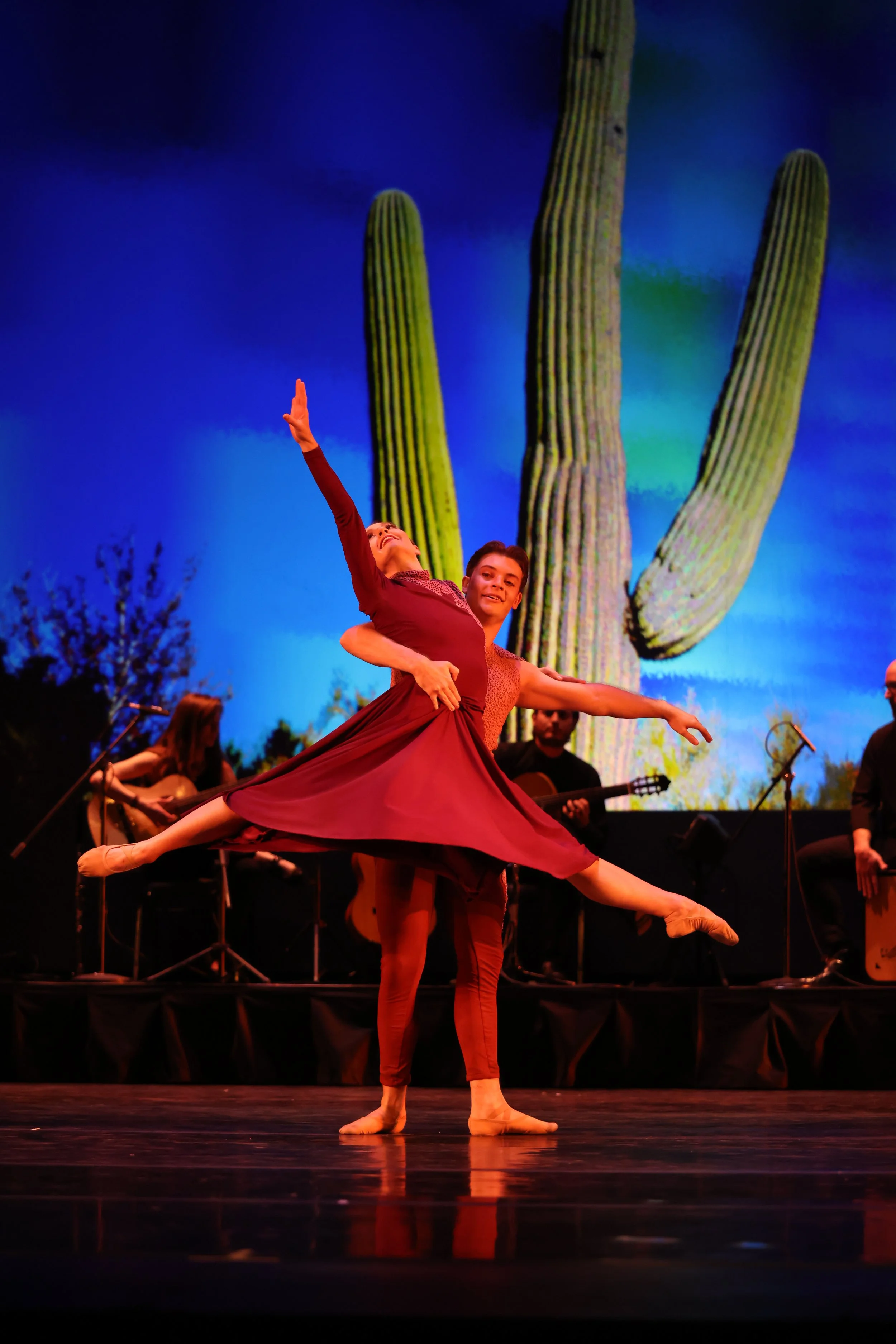
Photos by Carlos Chavez featuring Edward Oyarce-Solomon, Emma Greenawalt, Madeleine Kuebler, Kiera Morgan, Olivia Bellone, Duncan Barlow, Danielle Corte, Cole McMason and Maya Hughes
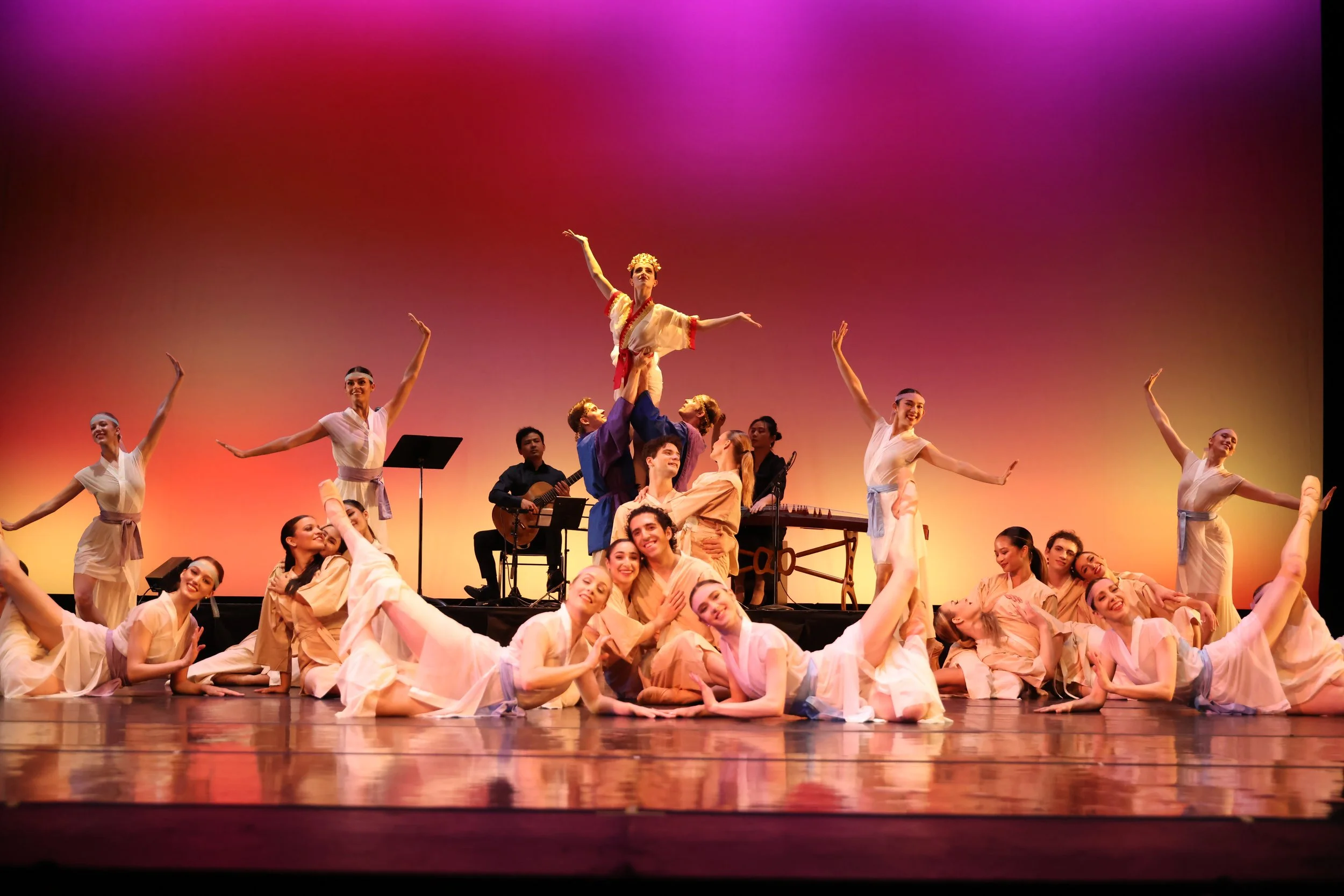
As musicians, we often speak about listening. But in Desert Voices, listening became something deeper—an act of presence, collaboration, and shared moments.
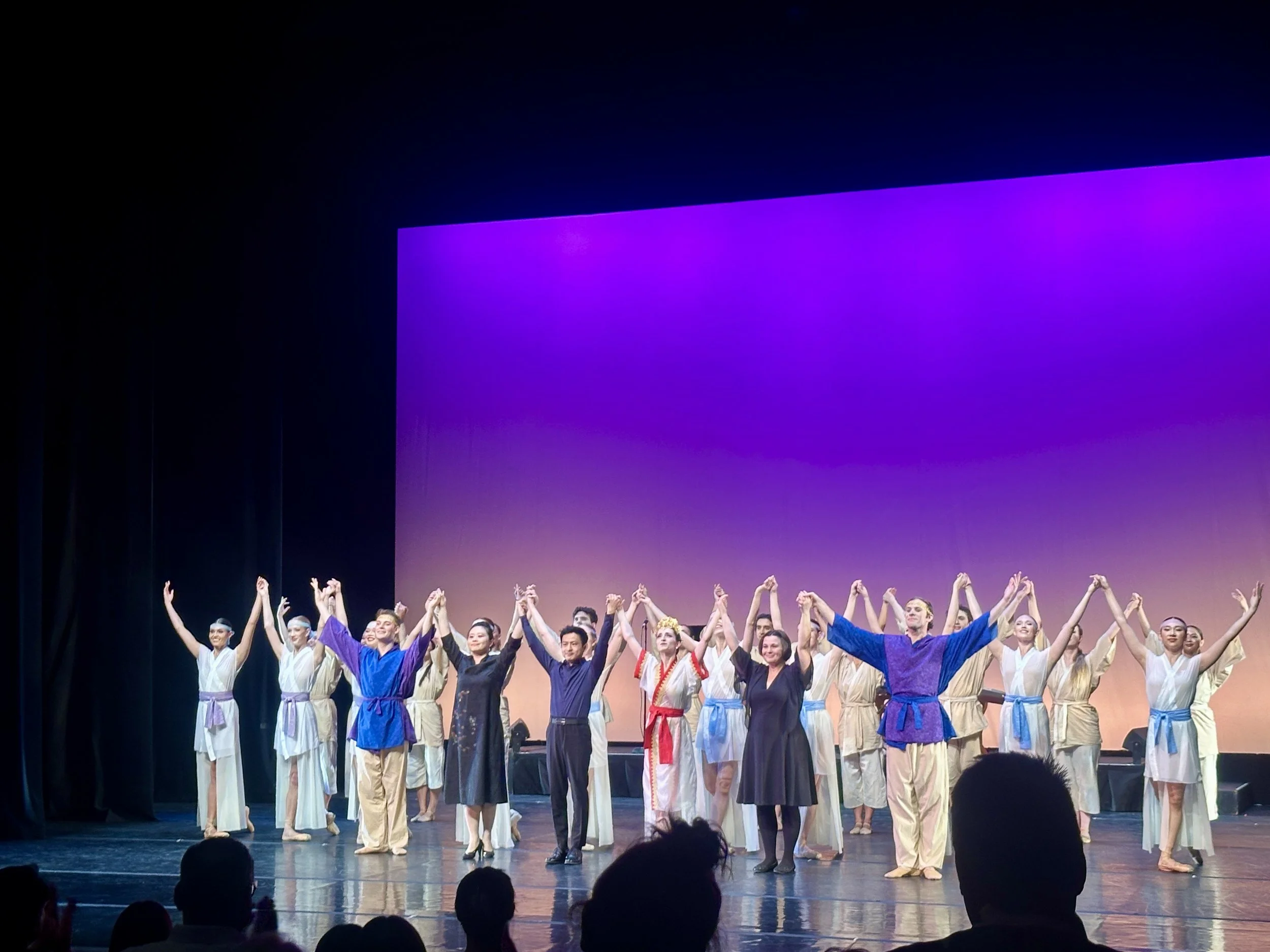
Returning to the stage with Ballet Tucson for Chieko Imada’s Himiko was both an honor and a fulfilling artistic experience. This production, presented in partnership with the Tucson Desert Song Festival and the Tucson Guitar Society, blends ballet with elements of traditional Japanese dance. The work tells the legendary story of Queen Himiko through movement and live music by Yusuke Nakanishi, performed by Duo Chinoiserie and soprano Erika Burkhart.
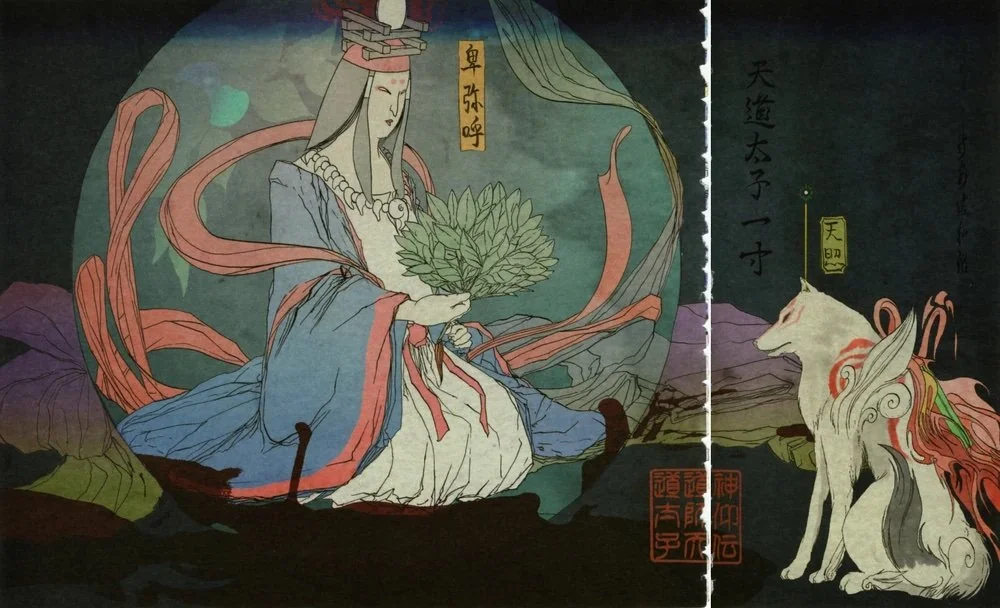
Himiko (卑弥呼) was a legendary queen of ancient Japan in the 3rd century. Historical accounts describe her as a shamanic ruler believed to possess spiritual powers, able to summon wind and rain and heal illness. As a priestess-queen, she remained unmarried and lived in seclusion within a fortified residence, communicating with the outside world through a male attendant while her younger brother managed state affairs, attended by a thousand women.
Choreographer Chieko Imada, born in Japan and based in Tucson for more than three decades, transformed this legend into a ballet that merges cultural traditions and contemporary stage language. Her choreography combines the elegance of ballet with symbolic gestures and stylized movements drawn from Japanese dance, allowing the dancers to express both strength and spiritual depth.
From Legend to Stage
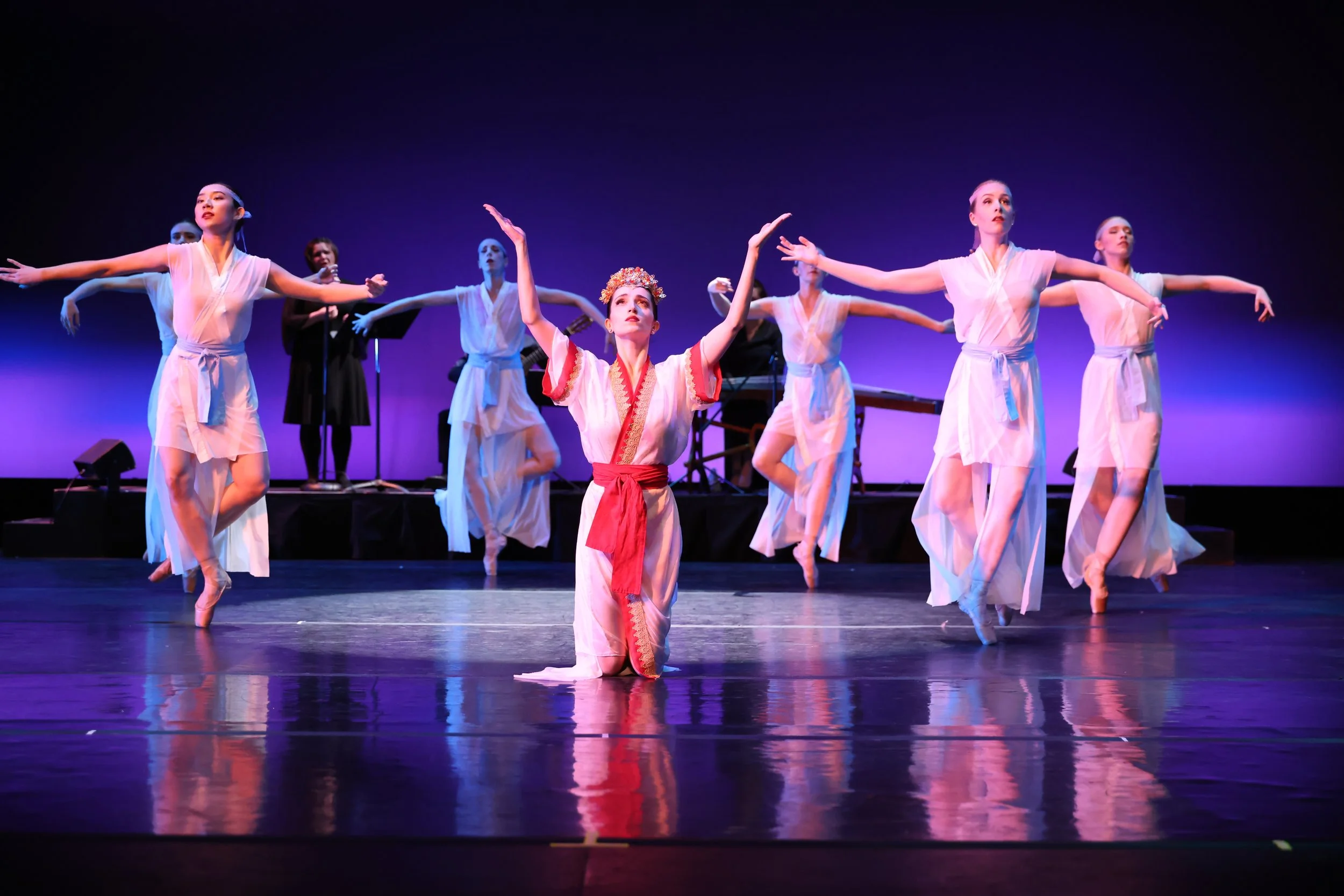
When Music and Movement Breath Together
In Himiko, the music shapes the choreography: the rhythms, phrasing, and emotional contours provided the foundation for the movement design. Yet in live performance, the relationship becomes fluid: dancers’ breath, timing, and physical energy subtly reshape the music in return. This exchange creates a living dialogue between musicians and dancers that can only happen on stage.
Because the score contains complex rhythmic changes—shifting frequently between various meters—precision and clarity are essential. The choreography aligns closely with these rhythms, requiring a steady musical pulse while still allowing the dancers freedom of expression. In rehearsal and performance, we continually adjust to one another, listening closely to maintain this balance.
Preparing for this collaboration meant expanding our awareness beyond the music alone. Ballet is a highly integrated art form, where musicians must also consider stage transitions, choreography, and lighting cues. Watching rehearsal recordings and studying the dancers’ movements helped us better understand the narrative flow and the subtle connections between music and motion.
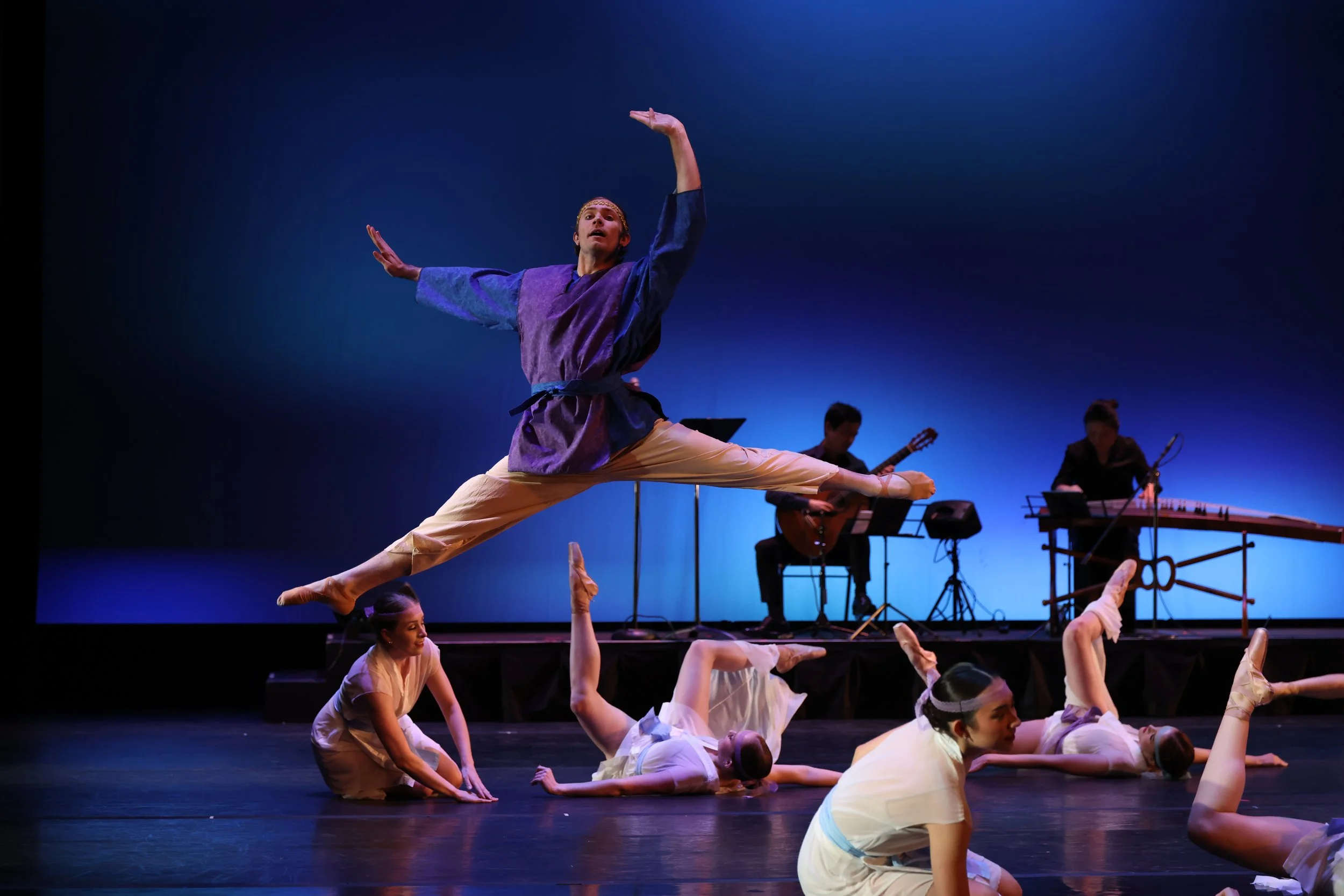
Collaboration Across Stage
This collaboration was especially meaningful because of the shared sensitivity between artists. In a local interview, Chieko spoke about her experience of the music:
“Their music moved me. When Jing plays, the warm sound of her instrument travels across thousands of years of history—each note carries great depth. She truly pours her soul into it.”
We in turn deeply felt the emotional world she created through choreography. A work shaped through mutual listening and shared breath naturally becomes something powerful and moving.
The program also showcased a wide range of artistic voices. Kiyon Ross’ Un-A’frayed Edges energized the stage with vibrant geometry and shifting formations, while Margaret Mullin’s world premiere Desert Dweller created an immersive tribute to the desert landscape, combining Carlos Chavez’s botanical projections with original flamenco guitar music by Misael Barraza-Díaz.
The Power of Live Performance
What makes projects like Himiko so meaningful is the immediacy of live performance. Music and dance come alive through presence—through breath, focus, and the energy shared between performers and audience.
Audience responses after the performance captured this experience beautifully:
“Heaven came to earth yesterday at the Temple of Music and Art. When you began your prelude, the man next to me dropped his jaw, removed his glasses, and whispered, ‘I wasn’t expecting this at all!’ I enjoyed every minute of your triumphant return to Tucson.”
Another audience member reflected on the role of live music in dance:
“We felt the music is the soul of dance. Live music gives ballet a rich life and a sense of time.”
For us, this dialogue between fingertips and dancing feet offered more than an interdisciplinary collaboration—it opened new spaces for imagination and beauty. Art grows like a living tree, nourished by inspiration, and in moments when music and movement breathe together, that inspiration becomes something we all share.
Grateful for the Journey
Desert Voices reminded us why we perform live. It is not perfection we seek, but connection. Between instrument and body. Between sounds and movement. Between artist and audience.
We are deeply grateful to Ballet Tucson, to our artistic collaborators, and to every audience member who joined us. To create in real time, to listen and respond across disciplines, and to witness art resonate within a community—this is the privilege of our work.